
A hernia occurs when tissue or part of an organ pushes through a weakness in the abdominal wall or groin. Hernias may develop in several locations, including the groin (inguinal or femoral hernias), around the belly button (umbilical hernias) or elsewhere in the abdominal wall. While some hernias cause few symptoms initially, they do not heal on their own and may gradually become larger over time.
Many patients ask whether hernia surgery is necessary immediately or whether it is safe to wait. The answer depends on the type of hernia, your symptoms and the risk of complications.
Signs You Should See A Hernia Surgeon
A specialist surgical assessment is recommended if you experience:
A visible lump in the groin or abdomen
Pain, discomfort or a dragging sensation
Symptoms that worsen with lifting, exercise or prolonged standing
Increasing size of the hernia over time
Difficulty with daily activities due to symptoms
Even if symptoms are mild, early assessment can help determine the most appropriate treatment plan.
Can A Hernia Heal Without Surgery?
No.
Unlike muscle strains or other soft tissue injuries, a hernia does not repair itself. Once a weakness develops in the abdominal wall, it generally remains present.
Some small hernias can be monitored for a period of time, particularly if they cause minimal symptoms. However, many hernias gradually enlarge and become more symptomatic.
When Is Hernia Surgery Recommended?
Hernia surgery is commonly recommended when:
Symptoms are affecting quality of life
Pain is becoming more frequent
The hernia is enlarging
There is concern about future complications
The hernia interferes with work, exercise or daily activities
Modern hernia repair techniques can often be performed using minimally invasive (keyhole) surgery, allowing many patients to return home the same day.
Concerned About a Hernia?
Early assessment can help confirm the diagnosis and determine the most appropriate treatment plan.
Call 02 9565 5514 or Book Online
Urgent appointments are available.
When Is A Hernia An Emergency?
Urgent medical assessment is required if a hernia becomes:
Suddenly painful
Firm or tender
Red or discoloured
Unable to be pushed back in
Associated with nausea, vomiting or abdominal distension
These symptoms may indicate incarceration or strangulation of the hernia and require prompt medical attention.
Benefits Of Early Assessment
Seeking specialist advice before symptoms become severe can provide several advantages:
Confirmation of the diagnosis
Discussion of treatment options
Planning surgery at a convenient time
Reduced risk of emergency complications
Earlier return to normal activities
Many patients are referred by their GP after an ultrasound confirms the presence of a hernia. Early assessment allows treatment options to be discussed before symptoms become more severe or complications develop.
When Should You See A Hernia Surgeon?
If you have noticed a lump in your groin or abdominal wall, or are experiencing discomfort that may be related to a hernia, specialist assessment can help confirm the diagnosis and determine whether surgery is recommended.
Your GP can arrange an ultrasound and provide a referral for specialist review. Bringing any imaging results to your appointment can assist with assessment and treatment planning.
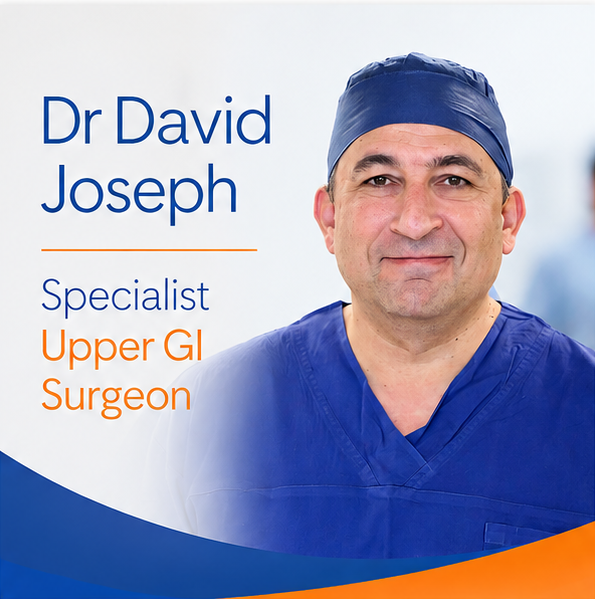
Dr David Joseph is a specialist Upper GI and General Surgeon with extensive experience in inguinal, umbilical, femoral, ventral and complex hernia repair.
Consultations are available in Newtown for patients throughout Sydney and regional NSW. A valid GP referral is required for specialist consultation.
To arrange an appointment, ask your GP for a referral and call 02 9565 5514 or book online.
Considering Hernia Surgery?
If hernia repair is recommended, there are different private and public treatment pathways available at hospitals across Sydney for insured or Medicare only patients. Eligible Medibank Private and HCF members may also have access to selected no-gap hernia surgery with Dr Joseph at East Sydney Private Hospital.
Learn more about hernia surgery costs, private health insurance, Medicare and no-gap options →
Related Hernia Resources

NO GAP Hernia SURGERY AVAILABLE FOR ELIGIBLE MEDIBANK PRIVATE and HCF MEMBERS
Dr Joseph treats patients with or without private health insurance, with all Australian private health funds accepted. Eligible Medibank Private and HCF members may have access to no gap hernia surgery at East Sydney Private Hospital, subject to clinical suitability and health fund eligibility criteria.
👉 Call 02 9565 5514 or book a consultation online.

