

Hernia Surgery Sydney | Laparoscopic & Open Hernia Repair
Hernia surgery is a safe and effective treatment for hernias that are causing symptoms, increasing in size, or at risk of complications such as incarceration or strangulation. Early assessment by a specialist hernia surgeon in Sydney allows surgery to be planned before emergency treatment becomes necessary.
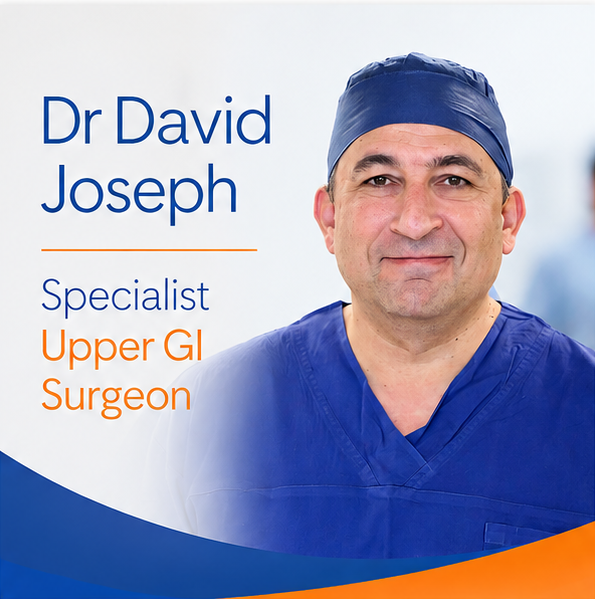
Dr David Joseph is a specialist hernia surgeon in Sydney, providing laparoscopic (keyhole) and open hernia repair for inguinal, umbilical, ventral and complex hernias. Every procedure is tailored to the patient, hernia type and individual circumstances to achieve the safest repair and optimal recovery.
Consultations are available in Newtown and via Telehealth for patients throughout Sydney, including the Inner West, Eastern Suburbs, North Sydney, Western Sydney and surrounding regions.
Why Choose Dr David Joseph for Hernia Surgery?
✓ Specialist upper gastrointestinal and laparoscopic surgeon (FRACS)
✓ More than 20 years of surgical experience
✓ Experienced in inguinal, umbilical, ventral and incisional hernia repair
✓ Minimally invasive (keyhole) and open hernia surgery
✓ Operates at Prince of Wales Private Hospital, Mater Hospital and East Sydney Private Hospital
✓ Consultations available in Newtown and via telehealth
Specialist Hernia Surgeon in Sydney
Dr David Joseph is a specialist hernia surgeon in Sydney with extensive experience in both routine and complex hernia repair.
He manages inguinal, umbilical, ventral and recurrent hernias, including cases following previous failed repairs. Both laparoscopic (keyhole) and open techniques are used, depending on the patient and hernia type.
Surgery is offered at private hospitals in Randwick (Prince of Wales Private Hospital), North Sydney (Mater Hospital), and Woolloomooloo (East Sydney Private Hospital), as well as public hospitals in Camperdown (Royal Prince Alfred Hospital) and Concord (Concord Hospital). Consultations are available in-person at the Newtown office or via Telehealth.
Call 02 9565 5514 to book a consultation with Dr David Joseph. Urgent appointments are available.
What Happens At Your Consultation?
Dr Joseph will assess the hernia, review any available imaging and medical history, discuss whether surgery is recommended and explain the most appropriate repair options, expected recovery, hospital options.
Concerned About a Hernia?
Early assessment can help confirm the diagnosis, discuss treatment options and allow surgery to be planned before complications develop.
Call 02 9565 5514 or Book Online
Urgent appointments are available.
Hernia Surgery Costs & Private Health Insurance
Dr Joseph treats privately insured (all Australian health funds accepted) and public patients for hernia surgery.

NO GAP SURGERY FOR ELIGIBLE PATIENTS AND PROCEDURES
Eligible Medibank Private and HCF members may have access to selected no gap hernia surgery with Dr Joseph at East Sydney Private Hospital.
Learn more about hernia surgery costs, private health insurance, Medicare and no-gap options →
Why Choose a Specialist Hernia Surgeon in Sydney?
Successful hernia repair depends on accurate diagnosis, appropriate technique selection, and careful post-operative management. As a specialist Upper GI surgeon, Dr Joseph manages both primary and recurrent hernias and tailors repair techniques to minimise recurrence risk and support long-term outcomes.
Dr Joseph is a fellowship-trained specialist Upper GI surgeon.
Learn more about Dr David Joseph →
What is Hernia Surgery? Laparoscopic & Open Hernia Repair Explained
Hernia surgery repairs a weakness in the abdominal wall to prevent tissue from protruding, relieve discomfort, and reduce the risk of complications such as incarceration or strangulation.
Laparoscopic vs Open Hernia Repair
Most hernias can be repaired using laparoscopic (keyhole) techniques, which involve small incisions, less post-operative pain, and a quicker return to normal activities. For larger or more complex hernias, an open repair may be recommended.
Stitch vs Mesh Hernia Repair – Which Technique is Right for You
Small hernia defects can often be repaired with a simple stitch, while larger hernias usually require mesh reinforcement. Mesh strengthens the abdominal wall, distributes tension, and lowers the risk of hernia recurrence.
Dr David Joseph carefully evaluates each patient to select the safest and most effective approach. Hernia repair is a safe procedure when performed by an experienced surgeon, and most patients recover well with proper care and follow-up.
Types of Hernias Treated in Sydney
Dr David Joseph performs hernia surgery for a wide range of abdominal wall hernias. Each type varies in location, complexity, and surgical approach, and treatment is tailored accordingly. For detailed information about all major types of abdominal wall hernias Dr Joseph treats, see below.
Inguinal (Groin) Hernia
Inguinal hernias occur when tissue pushes through a weak spot in the lower abdominal wall or groin. They are more common in men and can cause discomfort when lifting, coughing, or exercising. Dr Joseph offers both open and laparoscopic repair, tailored to the patient’s anatomy and lifestyle.
→ Learn more about inguinal hernia
Umbilical Hernia
Umbilical hernias appear near the belly button and are often visible as a small bulge. Adults may develop them due to obesity, pregnancy, or prior abdominal surgery. Repair involves closing the defect and reinforcing it with mesh when necessary.
→ Learn more about umbilical hernia
Ventral and Incisional Hernia
Ventral hernias develop at previous surgical sites or along the midline of the abdomen. They vary in size and complexity and may require advanced laparoscopic techniques or open repair with mesh. Dr Joseph ensures the approach matches the hernia’s size and location for optimal outcomes.
→ Learn more about ventral and incisional hernia
Femoral Hernia
A femoral hernia occurs when tissue pushes through a weak spot in the lower abdomen, just below the groin, into the femoral canal. Less common than inguinal hernias and more frequently seen in women, femoral hernias may cause a visible bulge or heaviness. Repair can be laparoscopic or open, carefully closing the defect to reduce pain and prevent complications.
→ Learn more about femoral hernia
Hiatus Hernia
A hiatus hernia occurs when part of the stomach moves through the diaphragm into the chest. It may be associated with reflux, heartburn, regurgitation, chest discomfort or difficulty swallowing. Treatment depends on the type and severity of the hernia and symptoms, with surgery considered when symptoms are persistent or complications develop.
→ Learn more about hiatus hernia surgery
Symptoms Indicating You May Need Hernia Surgery
Common symptoms suggesting a hernia may require repair include:
A visible bulge or swelling
Pain or discomfort during movement or lifting
Nausea or digestive discomfort
Severe cases can lead to incarceration or strangulation, which are surgical emergencies. Early evaluation by a Sydney hernia specialist can prevent complications and guide the most appropriate treatment.
Which specialist treats a hernia in Sydney?
Hernias are treated by a specialist general surgeon with expertise in abdominal wall surgery.
Dr David Joseph is a Sydney-based specialist hernia surgeon (FRACS) with experience managing both straightforward and complex hernia conditions.
Early assessment by a specialist hernia surgeon can help confirm the diagnosis and determine the most appropriate treatment approach.
When should you see a hernia surgeon?
If you have:
a visible lump or bulge
discomfort when lifting or coughing
a hernia increasing in size
a previous hernia repair that has recurred
A specialist consultation can confirm the diagnosis and determine whether surgery is required.
Consultations are available in Newtown and via Telehealth.
Have a hernia that is causing symptoms, increasing in size or has previously been repaired? Arrange a consultation with Dr Joseph to discuss whether surgery is appropriate. Call 02 9565 5514 or Book Online.
When Is Hernia Surgery Recommended by a Sydney Surgeon?
Most hernias can be repaired electively, particularly if they cause discomfort or are increasing in size. However, urgent surgery is required if a hernia becomes incarcerated (trapped) or strangulated (blood supply compromised).
Warning signs requiring immediate medical attention include:
Sudden or severe pain
Bulge that cannot be reduced
Redness or discolouration
Nausea or vomiting
Inability to pass gas or stool

Experiencing Hernia Symptoms?
If you have been diagnosed with a hernia, or have noticed a lump, discomfort or abdominal wall weakness, a specialist assessment can help determine whether surgery is appropriate and when treatment should be considered.
Call 02 9565 5514 or Book Online
How is Hernia Surgery Performed? (Laparoscopic & Open Techniques)
Hernia repair involves returning protruding tissue into the abdominal cavity and closing the defect in the muscle wall. Techniques depend on the hernia’s size, location, and type.
Small hernias: repaired with stitches
Larger hernias: reinforced with mesh
Laparoscopic repair: small incisions, camera-guided, faster recovery
Open repair: for large or complex hernias
Dr Joseph customises the surgical technique for each patient to ensure a safe, effective hernia repair and smooth recovery.
Recovery After Hernia Surgery – What to Expect
Recovery varies depending on hernia type and surgical approach.
Most patients walk the same day and resume light activities in a few days
Full recovery, including heavy lifting or strenuous exercise, usually takes 4–6 weeks
Sutures are dissolving and buried; waterproof dressings remain for 10-12 days
Follow-up appointments are scheduled 4–6 weeks after surgery
Most patients can eat and drink normally immediately, and early mobilisation aids recovery
Proper adherence to post-operative instructions ensures a safe and comfortable return to normal activities.
Risks and Potential Complications of Hernia Repair
Hernia surgery is generally safe, but it carries potential risks. While serious complications are uncommon when performed by an experienced surgeon like Dr David Joseph, it’s important for patients to be aware of possible outcomes. Careful pre-operative assessment and meticulous surgical technique help minimise these risks.
Potential complications include:
Hernia recurrence – There is a small lifetime risk that the hernia may return. Repeat surgery is safe and effective if this occurs.
Nerve injury – More common with open inguinal hernia repair. May cause numbness near the groin or scrotum, or, in rare cases, chronic pain.
Injury to the testicular artery – Rare, but can cause temporary swelling or shrinkage of the testicle. Most cases do not require further surgery.
Wound infection – Uncommon, treated with antibiotics and wound care.
Blood clots (DVT) – Rare; risk is reduced through early mobilisation and preventive measures.
Allergic or heart-related complications – Rare, usually identified during pre-operative screening.
Other rare complications – Includes seroma (fluid collection), hematoma (bruising), or delayed wound healing.
With proper care and monitoring, most patients recover without long-term issues.
Schedule An Appointment With Dr David Joseph
If you are experiencing symptoms of a hernia or would like expert advice regarding hernia repair in Sydney, contact Dr David Joseph’s team to arrange a consultation. Early evaluation allows safe planning and reduces the risk of emergency complications.
Call 02 9565 5514 to book a consultation.
Urgent appointments are available.
Prefer to book instantly? Book your appointment online.
Hernia Surgery Guides
Not sure whether surgery is right for you?
Hernia Surgery FAQs – Sydney Patients Ask
-
Dr David Joseph treats inguinal, umbilical, ventral/incisional, and femoral hernias. The surgical approach is tailored to the type, size, and location of your hernia for the safest and most effective outcome.
-
Most patients can resume light activities within a few days. Full recovery, including heavy lifting and strenuous exercise, typically takes 4–6 weeks. Dr Joseph provides guidance on safe activity levels during your recovery.
-
Hernia repair carries potential risks such as infection, bleeding, chronic pain, and hernia recurrence. Serious complications are uncommon when surgery is performed by an experienced Sydney surgeon like Dr Joseph.
-
Both techniques are safe and effective. Laparoscopic repair often allows faster recovery and less post-operative discomfort, while open repair may be recommended for larger or more complex hernias. The choice depends on the type of hernia, patient factors, and previous surgery.
-
Yes, there is a small lifetime risk of recurrence. If a hernia does recur, repeat surgery is safe and effective. Dr Joseph carefully plans procedures to minimise this risk.
-
Patients usually need a referral from a GP or specialist. Pre-operative tests may include imaging (ultrasound or CT scan) and routine blood tests to assess suitability for surgery in Sydney hospitals.
-
Dr Joseph performs hernia surgery at private hospitals in Randwick, North Sydney, and Woolloomooloo, as well as public hospitals in Camperdown (RPA) and Concord. Consultations can be done in-person at the Newtown office or via Telehealth.
-
Medicare rebates and private health insurance coverage are discussed during your consultation. Costs vary depending on the hospital, hernia type, and procedure. Dr Joseph’s team will guide you through all financial considerations before surgery.
Do you have questions about Hernia Surgery or would like to schedule an appointment with Dr Joseph? Please call 02 9565 5514 to book your consultation.
Learn more about Hernia Repair.
Related Surgical Services
Dr David Joseph also provides specialist care in:
Gallbladder Surgery in Sydney – treatment of gallstones and biliary disease
Bariatric (Weight Loss) Surgery in Sydney – gastric sleeve, gastric bypass and revision procedures
Hiatus Hernia Surgery in Sydney - for the treatment of reflux (GORD)

