

Hiatus Hernia Surgery Sydney
A hiatus hernia occurs when part of the stomach moves into the chest, often contributing to reflux symptoms such as heartburn or regurgitation.
While many cases are mild, persistent symptoms may require further assessment and, in some cases, surgical treatment.
Hiatus Hernia Surgery – Specialist Assessment and Repair in Sydney
A hiatus hernia is a common condition where part of the stomach moves into the chest, often contributing to reflux (GORD), chest discomfort, and difficulty swallowing.
While many patients manage symptoms with medication, some continue to experience persistent reflux or require long-term treatment. In these cases, a hiatus hernia may be the underlying cause.
Although medications can reduce reflux symptoms, they do not correct the underlying anatomical problem, and symptoms may persist or return over time.
Specialist assessment can help determine whether surgical repair is appropriate, particularly when symptoms are ongoing or related to anatomical changes.
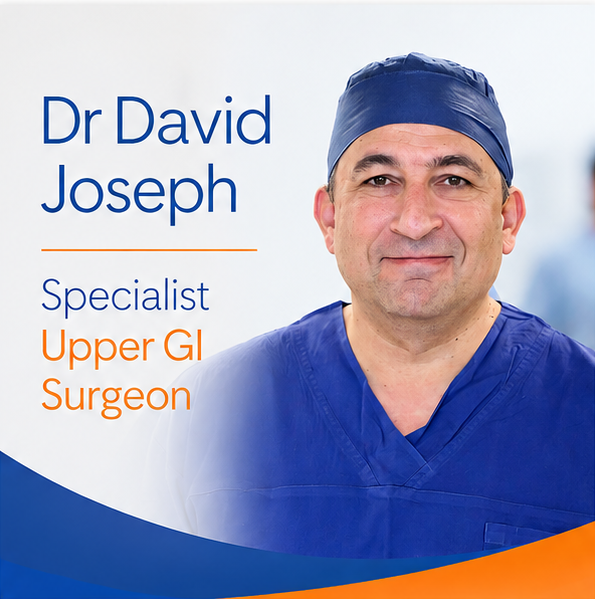
Dr David Joseph is a Sydney-based specialist general surgeon with expertise in minimally invasive laparoscopic hiatus hernia repair, providing tailored assessment and treatment for patients across Sydney and surrounding areas.
Call 02 9565 5514 to book a consultation. Urgent appointments are available.
What Is a Hiatus Hernia?
The hiatus is the opening in the diaphragm through which the oesophagus passes before connecting to the stomach. A hiatus hernia occurs when the upper part of the stomach protrudes through this opening.
Types of hiatus hernia include:
Sliding Hiatus Hernia
The most common type of Hiatus Hernia; the stomach and lower oesophagus slide into the chest.
Paraesophageal Hernia
Less common but more serious; part of the stomach pushes beside the oesophagus.
Hiatus hernias can cause or worsen reflux symptoms, chest pain, and in severe cases, difficulty swallowing or complications such as oesophagitis.
Symptoms of a Hiatus Hernia
Not all hiatus hernias cause symptoms. When present, common symptoms may include:
Persistent heartburn or acid reflux
Regurgitation of stomach contents
Chest discomfort or pressure
Difficulty swallowing
Belching or bloating
Shortness of breath in severe cases
Many patients with a hiatus hernia also experience reflux. Learn more about Reflux (GORD) treatment and when surgery may be considered.
Hiatus Hernia and Reflux
A hiatus hernia is one of the most common underlying causes of chronic reflux (GORD). When the stomach moves into the chest, the normal anti-reflux barrier is weakened, allowing acid to flow back into the oesophagus.
For patients with persistent reflux, identifying and treating a hiatus hernia may be an important part of long-term management.
Persistent Reflux Despite Medication?
If reflux symptoms continue despite treatment, a consultation can help determine whether a hiatus hernia may be contributing and whether surgery should be considered.
Call 02 9565 5514 or Book Online
Urgent appointments are available.
Hiatal Hernia Specialist Sydney
Many patients with reflux, heartburn, regurgitation or swallowing difficulties are unaware that a hiatus hernia may be contributing to their symptoms. Accurate diagnosis is important, as treatment options can vary depending on the size of the hernia, symptom severity and the presence of associated reflux (GORD).
Dr David Joseph is a Sydney-based specialist Upper GI and laparoscopic surgeon with experience in the assessment and management of hiatus hernias. He provides comprehensive evaluation for patients experiencing persistent reflux symptoms, chest discomfort, difficulty swallowing or large hiatus hernias identified on endoscopy or imaging.
Not all hiatus hernias require surgery. Specialist assessment can help determine whether symptoms can be managed with lifestyle modification or medication, or whether laparoscopic hiatus hernia repair may provide a more effective long-term solution.
Consultations are available in Newtown with Telehealth appointments offered where appropriate for patients across Sydney and regional New South Wales.
When to Consider Hiatus Hernia Surgery
Surgical repair may be recommended if:
Reflux symptoms persist despite medication
Long-term medication is required
A large hiatus hernia is present
Difficulty swallowing or chest discomfort develops
There is risk of complications such as obstruction or strangulation
Symptoms significantly affect quality of life
For selected patients, surgical repair can significantly improve reflux symptoms and reduce reliance on long-term medication.
Laparoscopic hiatus hernia repair aims to restore normal anatomy, tighten the hiatus opening, and reduce reflux. Dr David Joseph provides hiatus hernia surgery in Sydney using minimally invasive laparoscopic techniques.
Specialist assessment helps determine whether symptoms are related to a hiatus hernia and whether surgical treatment is appropriate.
Laparoscopic Hiatus Hernia Repair
Dr David Joseph specialises in minimally invasive laparoscopic repair, which offers smaller incisions, reduced post-operative pain, faster recovery, and shorter hospital stay.
The procedure involves repositioning the stomach into the abdomen, repairing the diaphragmatic opening, and, when appropriate, performing a fundoplication to strengthen the lower oesophageal sphincter.
Patients with reflux related to a hiatus hernia may require combined repair and reflux surgery. Learn more about fundoplication surgery in Sydney.
Recovery After Hiatus Hernia Surgery
Typical recovery highlights include:
Overnight or short hospital stay depending on complexity
Gradual return to normal diet over 2–4 weeks
Light activities within days; full activity in 4–6 weeks
Follow-up consultations to monitor healing and symptom resolution
Patients often experience significant reduction or elimination of reflux symptoms following surgery.
Hiatus Hernia Repair in Sydney
Dr David Joseph consults from his clinic in Newtown and also offers Telehealth consultations where appropriate. He operates at leading private and public hospitals across Sydney, including:
Prince of Wales Private Hospital in Randwick
Mater Hospital in North Sydney
East Sydney Private Hospital in Woolloomooloo
Royal Prince Alfred Hospital in Camperdown / Newtown
Concord Hospital in Concord
This allows patients from the Eastern Suburbs, Inner West, North Shore and surrounding Sydney regions to access expert surgical care close to home.
Call 02 9565 5514 to book a consultation with Dr David Joseph. Urgent appointments are available.
Why Choose Dr David Joseph, a Hiatal Hernia Specialist in Sydney?
Specialist general surgeon with advanced laparoscopic expertise
Comprehensive preoperative assessment and personalised surgical plan
Focus on minimally invasive techniques for faster recovery
Access to major private and public hospitals in Sydney
Coordination of care for reflux, GORD, and associated upper GI conditions
Dr Joseph is a fellowship-trained specialist Upper GI surgeon.
Learn more about Dr David Joseph →
Hiatus Hernia Surgery Frequently Asked Questions
-
A hiatal hernia is a structural abnormality where part of the stomach moves up through the diaphragm into the chest. Reflux is the backward flow of stomach acid into the oesophagus. A hiatal hernia can contribute to reflux but may also be present without symptoms. Dr Joseph can assess your condition and determine the best treatment in Sydney.
-
Most patients stay 1–2 nights in hospital. Light activity can usually be resumed within days, with full recovery in 4–6 weeks. Diet is gradually progressed, and follow-up visits monitor healing and symptom improvement.
-
Yes. Minimally invasive (laparoscopic) surgery is associated with smaller incisions, less pain, faster recovery, and lower complication rates compared with traditional open surgery. Dr Joseph performs these procedures safely in Sydney hospitals.
-
Most patients experience significant improvement or complete resolution of reflux symptoms, particularly when a fundoplication is performed alongside hernia repair. Dr Joseph will advise if fundoplication is necessary for your case.
-
Fundoplication is a procedure where the upper part of the stomach is wrapped around the lower oesophagus to strengthen the valve and prevent acid reflux. It is often performed at the same time as hiatus hernia repair to reduce reflux symptoms and improve long-term outcomes.
-
Not always. Surgery is recommended based on symptom severity, hernia size, and associated risks. Dr Joseph provides a personalised assessment to determine the timing and urgency of surgery.
-
Dr Joseph operates at private hospitals in Randwick, North Sydney, and Woolloomooloo, and public hospitals in Camperdown (RPA) and Concord. The hospital choice can be discussed during or following your consultation.
-
All surgery carries risks, including infection, bleeding, difficulty swallowing, or reflux recurrence. Serious complications are uncommon when performed by an experienced Sydney surgeon like Dr Joseph.
-
Patients usually need a referral from a GP or specialist. Pre-operative tests may include endoscopy, ultrasound, or CT scan, as well as routine blood tests, to ensure you are fit for surgery.
-
Patients are advised to gradually progress diet, avoid large meals initially, and follow Dr Joseph’s advice on weight management and reflux reduction. Lifestyle changes help maintain surgical results and improve long-term outcomes.
-
-
Medicare rebates and private health insurance coverage are discussed during consultation. Costs vary depending on the hospital, type of surgery, and individual patient factors. Dr Joseph’s team provides guidance to help you plan financially before surgery.
-
Small hiatus hernias often do not require surgery unless they cause significant reflux, swallowing difficulties, chest discomfort, or persistent symptoms despite medication and lifestyle changes.
Learn more about reflux (GORD) and the related symptoms.

