

Epigastric Hernia Sydney – Symptoms, Diagnosis & Treatment
An epigastric hernia is a lump or bulge that develops in the upper abdominal wall between the breastbone and belly button. These hernias may cause discomfort with lifting, coughing or exercise and can gradually enlarge over time. Specialist assessment can determine whether monitoring or surgical repair is appropriate.
While some are painless, others can worsen over time - understanding the symptoms helps determine when treatment or surgery may be needed.
What Is An Epigastric Hernia?
An epigastric hernia occurs when fatty tissue or part of the abdominal contents pushes through a weakness in the upper midline of the abdominal wall, between the breastbone (sternum) and the belly button.
These hernias develop along the linea alba, a natural seam in the abdominal muscles. They are often small but can cause discomfort, tenderness, or a noticeable lump in the upper abdomen, particularly with straining or physical activity.
Patients with an epigastric hernia in Sydney commonly seek specialist assessment after noticing a persistent lump or tenderness in the upper abdomen.
Epigastric hernias are one of several types of abdominal wall hernia. Learn more about Hernia in Sydney – Causes, Symptoms & Specialist Assessment.
Where Does An Epigastric Hernia Occur?
Epigastric hernias occur in the upper central abdomen, typically:
Between the breastbone and umbilicus
Along the midline of the abdominal wall
Through small defects in the linea alba
Unlike umbilical hernias, they do not involve the belly button itself.
Some patients may have more than one small defect along the midline.
Epigastric Hernia Symptoms
Epigastric hernias are often small but can cause symptoms, particularly with physical strain. Common symptoms include:
A small lump in the upper abdomen
Localised tenderness or discomfort
Pain when coughing, lifting, or straining
A firm or non-reducible lump
Unlike larger ventral hernias, epigastric hernias often contain fatty tissue rather than bowel. However, larger defects can occasionally contain bowel and should be assessed appropriately.
Experiencing epigastric hernia symptoms? Call 02 9565 5514 to book a consultation with Dr David Joseph.
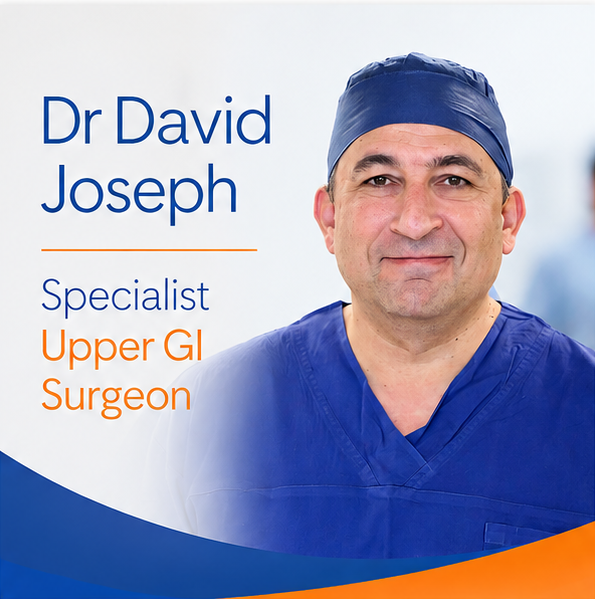
Specialist Epigastric Hernia Assessment
If you have noticed a lump above the belly button, specialist assessment can determine whether monitoring or surgical repair is appropriate.
Call 02 9565 5514 or Book Online
Urgent Appointments Are Available
Is an Epigastric Hernia Dangerous?
Most epigastric hernias are not immediately dangerous. However, they do not resolve on their own and may enlarge over time.
In some cases, complications can occur if tissue becomes trapped (incarcerated) or loses its blood supply (strangulated), which may require urgent surgical treatment.
Early assessment helps determine whether monitoring or surgical repair is the most appropriate approach.
What Causes An Epigastric Hernia?
Epigastric hernias develop due to weakness in the midline connective tissue of the abdominal wall.
Contributing factors may include:
Congenital weakness in the linea alba
Increased intra-abdominal pressure
Heavy lifting
Chronic coughing
Obesity
Previous abdominal strain
Some epigastric hernias are present for years before symptoms develop.
Do Epigastric Hernias Require Surgery?
Small, asymptomatic epigastric hernias may be monitored. For symptomatic cases, elective epigastric hernia repair in Sydney is generally straightforward and safe. Surgery may be recommended if:
Pain is present
The lump enlarges
Daily activities are affected
There is concern about incarceration
Repair involves closing the defect in the abdominal wall. In some cases, mesh reinforcement may be recommended depending on defect size and patient factors.
For detailed information about surgical techniques and recovery, visit our Hernia Surgery in Sydney (Hernia Repair) page.
Open vs Laparoscopic Epigastric Hernia Repair
Epigastric hernia repair may be performed using either open surgery or laparoscopic (keyhole) surgery.
Open Repair
Often suitable for smaller epigastric hernias through a small incision directly over the defect.
Laparoscopic Repair
May be considered for larger defects, multiple defects or selected patients where minimally invasive surgery is preferred.
The most appropriate technique depends on:
hernia size
patient anatomy
previous abdominal surgery
overall health factors
Dr David Joseph will discuss the most appropriate repair method during consultation.
How Is An Epigastric Hernia Diagnosed?
Diagnosis is usually made through careful physical examination by an experienced specialist hernia surgeon.
Imaging such as ultrasound or CT scan may be used if:
The lump is difficult to detect
Pain is present without a visible bulge
There is uncertainty about the diagnosis
Early specialist evaluation helps determine whether surgery is necessary.
Recovery After Epigastric Hernia Repair
Recovery depends on defect size and surgical approach.
Most patients:
Return to light activity within 1–2 weeks
Avoid heavy lifting for approximately 4–6 weeks
Experience gradual improvement in discomfort
Minimally invasive techniques may be suitable in selected cases.
Specialist Epigastric Hernia Repair In Sydney
Dr David Joseph is a specialist Upper GI and General Surgeon with extensive experience in abdominal wall hernia surgery, including:
Epigastric Hernia Repair
Umbilical Hernia Repair
Inguinal Hernia Repair
Consultations are available in Newtown and via Telehealth, with surgery performed at leading Sydney private hospitals.
Book a Consultation With Dr David Joseph
If you have noticed a lump or persistent discomfort in the upper abdomen, specialist assessment can clarify the diagnosis and discuss treatment options.
Call 02 9565 5514 to book a consultation.
Prefer to book instantly? Book your appointment online.
Related Hernia Conditions
Epigastric hernias are part of the broader group of abdominal wall hernias. These include:
Other conditions that may be related to hernia repair:
Obesity and Weight-Related Conditions – increased abdominal pressure may contribute to hernia formation.
Dr David Joseph provides comprehensive assessment and surgical management of abdominal wall hernias and related upper gastrointestinal conditions.
Epigastric Hernia FAQs
-
Most epigastric hernias are small and not immediately dangerous, but persistent pain or enlargement should be assessed by a specialist.
-
No. Hernias do not resolve without surgery and may gradually enlarge over time.
-
Not always. Small defects may be repaired without mesh. Larger defects may require reinforcement to reduce recurrence risk.
-
It is typically a straightforward procedure, often performed as day surgery, depending on defect size and patient health.
-
Most patients return to normal daily activities within a few weeks, with avoidance of heavy lifting for approximately 4–6 weeks.
-
No. Epigastric hernias do not repair themselves. While small hernias may remain stable for a period of time, the defect in the abdominal wall remains present. If symptoms develop or the hernia enlarges, surgical repair may be recommended.
-
An epigastric hernia occurs above the belly button along the upper abdominal midline. An umbilical hernia occurs directly through or adjacent to the belly button itself. Both are abdominal wall hernias but occur in different locations.
Do you have questions about Hernia Surgery or would like to schedule an appointment with Dr Joseph? Please call 02 9565 5514 to book your consultation.

