

Gastric Bypass Surgery Sydney | Specialist Bypass Surgeon (Roux-en-Y & Single Loop)
Gastric bypass surgery is a highly effective bariatric procedure that combines restriction of food intake with changes to digestion and nutrient absorption.
It is performed using minimally invasive (keyhole) techniques and is particularly effective for patients with reflux, type 2 diabetes, or more complex metabolic conditions.
Specialist Gastric Bypass Surgeon in Sydney
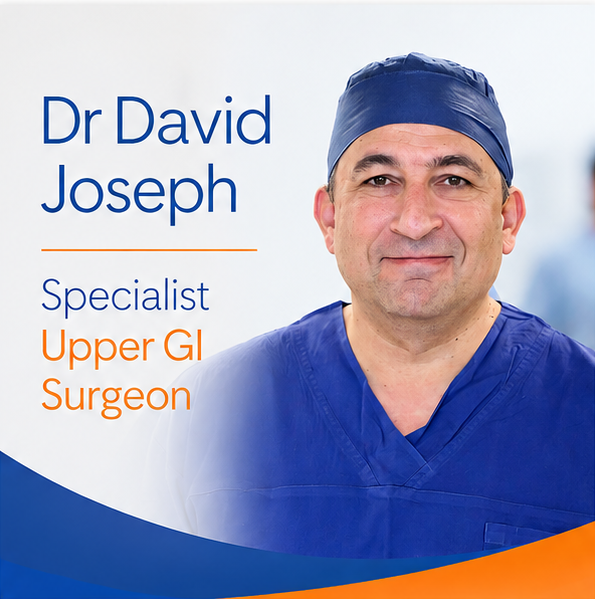
Dr David Joseph is a specialist upper gastrointestinal and laparoscopic surgeon in Sydney with extensive experience in gastric bypass surgery.
He performs laparoscopic gastric bypass procedures with a strong focus on:
Patient safety
Careful procedure selection
Long-term weight loss outcomes
Structured post-operative follow-up
Surgery is performed at leading private hospitals including:
Prince of Wales Private Hospital (Randwick)
Mater Hospital (North Sydney)
East Sydney Private Hospital (Woolloomooloo)
Consultations are available in Newtown or via Telehealth.
Schedule a consultation: Call 02 9565 5514. Urgent appointments are available.
What Is Gastric Bypass Surgery?
Gastric bypass surgery involves creating a small stomach pouch and rerouting part of the small intestine.
This results in:
Reduced food intake
Reduced calorie absorption
Hormonal changes that improve metabolism
These combined effects lead to significant and sustained weight loss.
Learn more about Bariatric Surgery in Sydney
Types of Gastric Bypass Surgery
There are two main types of gastric bypass procedures:
Roux-en-Y Gastric Bypass
The traditional and widely established form of gastric bypass surgery.
Often recommended for patients with:
Significant reflux
More severe metabolic disease
Complex clinical presentations
Roux-en-Y Bypass has a long track record of safety and effectiveness.
Single Loop (Mini) Gastric Bypass
This is a simplified variation of gastric bypass that involves a single intestinal connection (also known as a Single Anastomosis Gastric Bypass).
It offers:
Shorter operative time
Effective weight loss
Strong metabolic improvement
It is commonly performed and may be suitable for selected patients.
How Gastric Bypass Surgery Works
Gastric bypass works through two primary mechanisms:
Reduced Stomach Capacity
A small stomach pouch limits how much food can be eaten.
Altered Digestion
Rerouting the small intestine reduces calorie and nutrient absorption and leads to hormonal changes that improve metabolism.
These combined effects result in significant weight loss and metabolic improvement.
Who Is Suitable for Gastric Bypass Surgery?
Gastric bypass may be appropriate for patients who:
Have a BMI of 35 or greater
Have a BMI of 30–34 with obesity-related conditions
Have significant reflux symptoms
Have poorly controlled type 2 diabetes
Have a higher BMI (particularly over 50)
Have had previous bariatric surgery
Require a more metabolically effective surgical option
Suitability is determined following a comprehensive consultation and medical assessment.
Learn more about obesity, weight-related conditions and treatment options.
Patients may also benefit from structured pre-operative and post-operative support programs available through BodyFree Weight Loss Clinic.
Expected Weight Loss and Health Benefits
Gastric Bypass surgery typically results in significant and sustained weight loss and metabolic improvement.
Expected outcomes include:
70–80% excess weight loss within 12–18 months
Strong improvement or remission of type 2 diabetes
Improvement in blood pressure and cholesterol
Reduced risk of obesity-related complications
Long-term success depends on adherence to dietary guidance and follow-up care.
Considering Gastric Bypass Surgery?
Discuss whether gastric bypass surgery may be appropriate for you and learn about the procedure, recovery and expected outcomes.
Call 02 9565 5514 or Book Online
Recovery After Gastric Bypass Surgery
Recovery following laparoscopic gastric bypass is similar to other minimally invasive procedures.
Hospital stay: usually 1–2 nights
Walking: same day
Light activity: within several days
Return to work: 1–2 weeks
Vigorous activity: after 3–4 weeks
Patients follow a structured diet progression and require ongoing nutritional monitoring.
For structured dietary guidance, support programs, and ongoing care pathways, patients can access multidisciplinary support through BodyFree Weight Loss Clinic.
Risks and Considerations
Gastric bypass is a safe and well-established procedure but is more complex than gastric sleeve surgery.
Potential risks include:
Bleeding
Infection
Leak at surgical connections
Nutritional deficiencies
Dumping syndrome
Careful follow-up and monitoring are essential. All risks are discussed in detail during consultation.
Gastric Bypass vs Gastric Sleeve
Gastric Bypass may be preferred for patients with:
Significant reflux
More advanced diabetes
Previous bariatric procedures
Specific metabolic requirements
Gastric sleeve remains a suitable first-line option for many patients.
Learn more about Gastric Sleeve Surgery in Sydney
Learn more about Bariatric Surgery in Sydney
Other Bariatric Surgery Options
Depending on your situation, other procedures may be considered:
Revision bariatric surgery
See all options on the Bariatric Surgery page
Why Choose a Specialist Gastric Bypass Surgeon?
Choosing a specialist upper GI surgeon ensures:
Appropriate patient selection
Correct procedure choice
Safe surgical technique
Management of complex and revision cases
Long-term follow-up and care
Structured Bariatric Care and Support
Successful outcomes require more than surgery alone.
For structured bariatric programs, multidisciplinary care, and ongoing support:
FAQs – Gastric Bypass Surgery
-
Most patients lose approximately 70–80% of excess body weight within 12–18 months, depending on lifestyle and follow-up care.
-
Gastric Bypass may be more suitable for patients with reflux, type 2 diabetes, or complex metabolic conditions. The best option depends on individual assessment.
-
The procedure typically takes 90 minutes and is performed under general anaesthetic.
-
Lifelong vitamin and mineral supplementation is commonly required due to changes in nutrient absorption.
Book a Gastric Bypass Consultation in Sydney
If you are considering gastric bypass surgery, a specialist consultation is the first step.
Dr David Joseph provides personalised assessment to determine the most appropriate procedure for your individual circumstances.
Call 02 9565 5514 or complete the form below to book your consultation.
Urgent appointments are available.
Related Upper GI Surgical Services
Dr Joseph also provides:
Gallbladder Surgery in Sydney – laparoscopic cholecystectomy
Hernia Surgery in Sydney – inguinal, ventral and complex repairs

Learn more about the broader bariatric program offered by Dr Joseph at the BodyFree Weight Loss Clinic.
Dr Joseph is a fellowship-trained specialist Upper GI surgeon.
Learn more about Dr David Joseph →

