

Umbilical Hernia Sydney (Belly Button Hernia) – Symptoms, Diagnosis & Repair
An umbilical hernia typically appears as a soft bulge at the belly button that may become more noticeable when standing, coughing, or straining.
Although some remain painless, others can enlarge or cause discomfort and may require surgical repair over time.
What Is An Umbilical Hernia?
An umbilical hernia (belly button hernia) occurs when abdominal tissue or part of the intestine pushes through a weakness near the belly button (umbilicus). It typically appears as a soft lump or bulge at the navel, which may become more noticeable when standing, coughing or straining.
Umbilical hernias are common in adults and usually do not resolve without surgery. Over time, they may gradually enlarge.
This is one of the most common types of abdominal wall hernia seen in adults. Definitive treatment usually involves surgical repair.
Patients with an umbilical hernia in Sydney often seek specialist assessment when they notice a persistent bulge at the belly button, discomfort during activity, or cosmetic concern.
Umbilical hernias are one of several types of abdominal wall hernias. Learn more about Hernia in Sydney – Causes, Symptoms & Specialist Assessment.
Why Do Umbilical Hernias Develop?
Umbilical hernias develop due to weakness in the abdominal wall combined with increased abdominal pressure.
Contributing factors include:
Obesity
Pregnancy
Chronic coughing
Heavy lifting
Constipation
Fluid in the abdomen (ascites)
Previous abdominal surgery
Family history
In adults, increased intra-abdominal pressure over time can gradually stretch the natural weakness at the umbilicus.
Umbilical Hernia Symptoms
Umbilical hernias typically cause symptoms around the belly button, particularly with increased abdominal pressure. Symptoms may include:
A soft bulge at the belly button
A lump that enlarges when standing or straining
Discomfort or tenderness
Pain with lifting or coughing
A visible “outie” appearance
Small hernias may be painless but can enlarge over time.
Experiencing umbilical hernia symptoms? Call 02 9565 5514 to book a consultation with Dr David Joseph. Urgent appointments are available.
Can An Umbilical Hernia Become Dangerous?
Most umbilical hernias are not immediately dangerous, but they do not repair themselves in adults and typically enlarge over time.
In some cases, the hernia can become trapped (incarcerated) or lose its blood supply (strangulated), which requires urgent treatment.
Possible complications include:
Incarceration
The hernia becomes trapped and cannot be reduced.
Strangulation
The blood supply to the herniated tissue is compromised. This may cause:
Sudden severe pain
Swelling and redness
Nausea or vomiting
Strangulation is uncommon but is a surgical emergency requiring urgent hospital treatment.
Early elective repair significantly reduces emergency risk.
Who Should Consider Umbilical Hernia Repair?
Surgical repair is generally recommended if:
The hernia causes discomfort
The bulge is enlarging
Daily activity is affected
There is risk of incarceration
The patient is medically fit for surgery
Even small umbilical hernias may enlarge over time, particularly in patients with obesity or chronic straining. Planned elective repair is generally safer and more straightforward than emergency surgery.
For detailed information about repair options, see our Hernia Surgery in Sydney page.
How Is An Umbilical Hernia Diagnosed?
Most umbilical hernias are diagnosed clinically during examination.
Imaging may be used if needed:
Ultrasound
CT scan
Pre-operative assessment ensures suitability for safe anaesthesia.
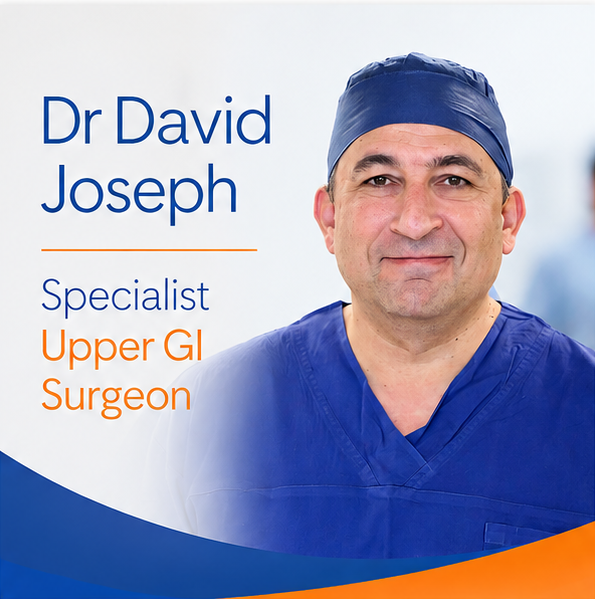
Specialist Umbilical Hernia Repair Sydney
Dr David Joseph provides assessment and surgical treatment for umbilical hernias, including open and laparoscopic repair options tailored to the individual patient.
Call 02 9565 5514 or Book Online
Urgent Appointments Are Available
Umbilical Hernia Surgery In Sydney
Surgical repair is the only definitive treatment for an umbilical hernia. The specific technique used depends on the size of the hernia and individual patient factors.
Open vs Laparoscopic Umbilical Hernia Repair
Umbilical hernias can be repaired using either open surgery or laparoscopic (keyhole) surgery.
Open repair is commonly used for smaller hernias and may be performed with sutures alone or with mesh reinforcement depending on the size of the defect.
Laparoscopic repair may be recommended for larger hernias, recurrent hernias, patients with obesity, or when additional abdominal wall defects are present.
The most appropriate technique depends on the size of the hernia, previous surgery, patient anatomy and overall health.
Dr David Joseph performs umbilical hernia repair using evidence-based techniques designed to minimise recurrence and optimise recovery.
What Happens If An Umbilical Hernia Is Left Untreated?
Most adult umbilical hernias do not heal without surgery.
Over time the hernia may enlarge and symptoms may worsen. In some patients the hernia can become incarcerated (trapped) or strangulated (loss of blood supply), which requires urgent surgery.
For this reason, specialist assessment is often recommended when an umbilical hernia is causing symptoms or increasing in size.
Related Hernia Conditions
Patients with an umbilical hernia may also experience:
Learn more about Hernia Symptoms, Causes & Specialist Assessment.
Obesity can increase abdominal pressure and contribute to hernia development. Learn more about Obesity and Bariatric Surgery.
Related Hernia Resources
Specialist Umbilical Hernia Surgeon Sydney
Dr David Joseph is a Specialist Upper GI and General Surgeon with extensive experience in abdominal wall hernia repair, including umbilical hernias, inguinal hernias, incisional hernias and ventral hernias.
Consultations are available in Newtown and via Telehealth, with surgery performed at Prince of Wales Private Hospital, Mater Hospital, East Sydney Private Hospital, Royal Prince Alfred Hospital and Concord Hospital.
Book a Consultation With Dr David Joseph
If you have symptoms of an umbilical hernia or would like specialist advice, arrange a consultation with Dr David Joseph.
Call 02 9565 5514 to book a consultation.
Urgent appointments are available.
Prefer to book instantly? Book your appointment online.
Umbilical Hernia FAQs
-
In adults, umbilical hernias do not usually heal on their own. While some small hernias may remain stable for a period of time, many gradually enlarge and can become more symptomatic over time.
Surgical repair is currently the only definitive treatment for an umbilical hernia. An assessment by a specialist surgeon can help determine whether monitoring or repair is the most appropriate option for your individual circumstances.
-
Most repairs are performed as day surgery or with a short hospital stay. Recovery is usually straightforward.
-
Not all umbilical hernias require mesh repair. The decision depends on factors such as the size of the hernia, the strength of the surrounding tissues and whether the hernia has recurred after previous surgery.
Small hernias can sometimes be repaired using sutures alone, while larger defects often benefit from mesh reinforcement to reduce the risk of recurrence. Dr David Joseph will discuss the most appropriate repair technique during your consultation.
-
Recovery following umbilical hernia repair varies depending on the size of the hernia and the type of repair performed. Most patients return home on the day of surgery and can resume light activities within a few days.
Many patients return to office-based work within 1–2 weeks, although heavy lifting and strenuous exercise are usually restricted for 4-6 weeks. Dr Joseph will provide personalised recovery advice based on your procedure and occupation.
-
You should consider specialist assessment if you notice a lump or bulge at your belly button, experience discomfort or pain, or if the hernia appears to be increasing in size.
Your GP can assess your symptoms and provide a referral to a specialist surgeon for further evaluation. During your consultation, the diagnosis can be confirmed and treatment options discussed, including whether surgical repair is recommended.
Urgent medical attention may be required if the hernia becomes suddenly painful, firm, discoloured or cannot be pushed back in, as these symptoms can indicate a complication requiring prompt treatment.
-
Umbilical hernias are typically assessed and treated by a specialist general surgeon with experience in abdominal wall and hernia surgery. A surgeon can confirm the diagnosis, determine whether repair is recommended and discuss the most appropriate treatment options based on the size of the hernia, your symptoms and your overall health.
Dr David Joseph is a specialist surgeon in Sydney experienced in the assessment and repair of umbilical, inguinal, ventral and other abdominal wall hernias.
Do you have questions about Hernia Surgery or would like to schedule an appointment with Dr Joseph? Please call 02 9565 5514 to book your consultation.
Related Surgical Services
Dr David Joseph also provides specialist care in:
Gallbladder Surgery in Sydney – treatment of gallstones and biliary disease
Bariatric (Weight Loss) Surgery in Sydney – gastric sleeve, gastric bypass and revision procedures

